The Experience
Ditch the slides. Play your way to AI fluency.
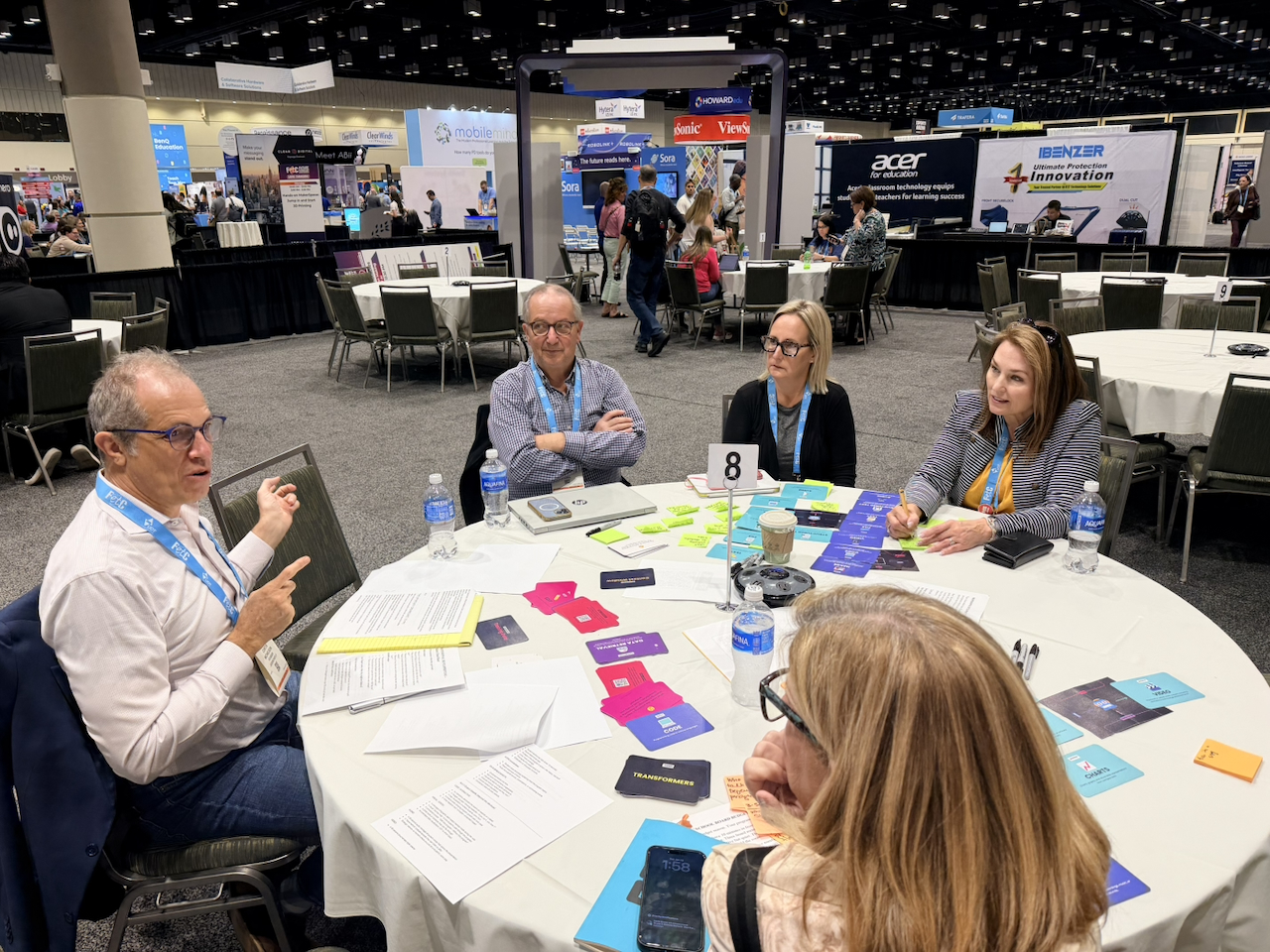
Most AI training puts people in rows and talks at them. This one puts cards on the table and lets them figure it out together. Built on the AI Tinkerers' Card Deck — a tool I co-created with its designer, helped bring to market, and have since developed my own gameplay around — this session is structured as three competitive acts, each building on the last.
Teams leave with a shared vocabulary, a more expansive view of what generative AI can actually do, and at least one concrete workflow they designed themselves. No jargon lectures. No passive consumption. Just structured play that sticks.
Session Structure
Three acts. One hour. Genuinely competitive.
10 minutes — Warm-up
The Language Landscape
Teams race to arrange five key AI terms in chronological order — from the birth of AI to the transformer models powering today's tools. Nobody gets it right. That's the point. Everyone starts on equal ground and walks away understanding that AI is 70 years in the making, not last year's chatbot craze.
15 minutes — Act Two
The Opportunity Dreamscape
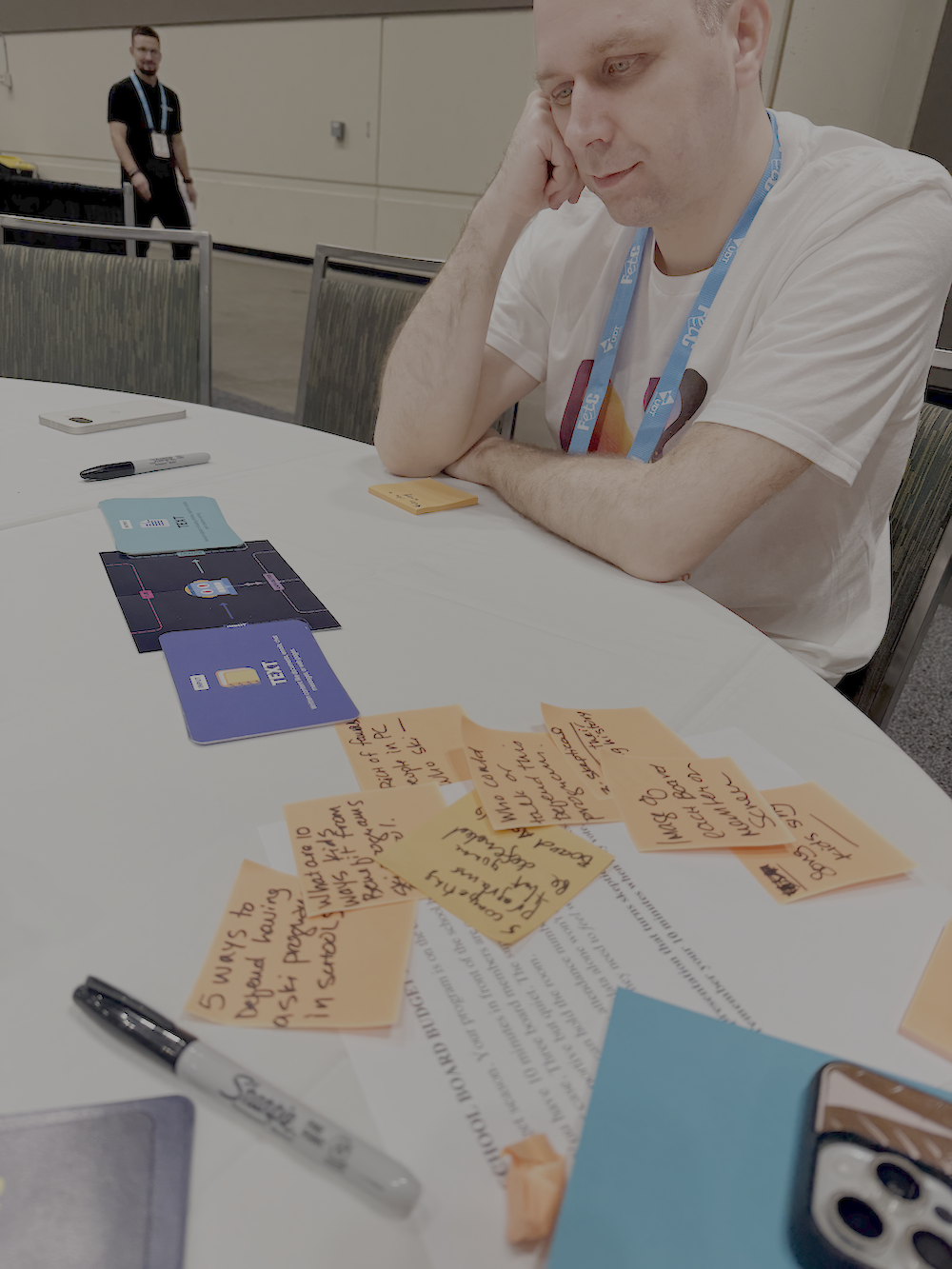
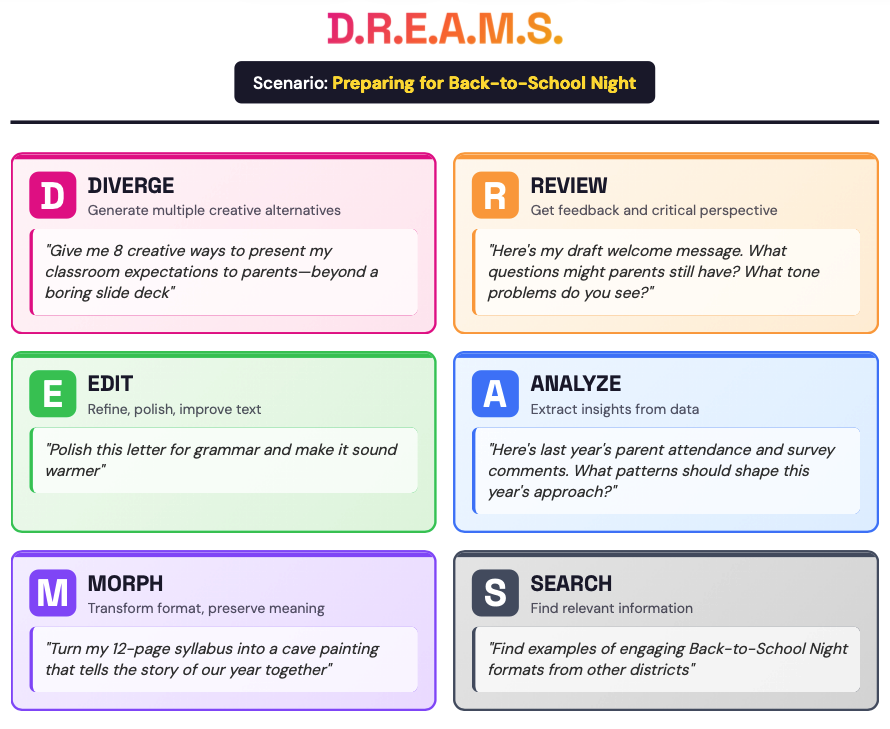
Using the DREAMS framework cards, teams brainstorm real use cases for their specific context. Then comes the constraint: I pull the easy cards — Edit, Review, Analyze, Search — and force them to explore what generative AI can do beyond writing and lookup. The ideas that emerge in this phase always surprise the room.
15 minutes — Act Three
Dream Up Your Own Solutions
The game board that's been sitting in the center of the table the whole time finally gets used. Teams physically assemble LLM workflows — input, task, output — using the cards. Points go to teams who go beyond text-in, text-out. Images, audio, video, code. The payoff: they leave knowing exactly what questions to ask AI vendors.
The DREAMS Framework
Six modes. One constraint that changes everything.
The DREAMS framework maps the full range of what a language model can do. Most teams only ever use the bottom right — Edit, Review, Search. This session makes that visible, then takes those cards off the table.
Background
Built by someone who helped build the deck.
I was one of Alex Eisenchteter's first collaborators on the AI Tinkerers' Card Deck — a beta tester and early adopter who helped refine the product before it went to market. What I bring to the table isn't just familiarity with the cards. It's years of facilitation practice and a gameplay structure I've developed specifically for teams navigating the AI moment.
The result is a session that feels less like training and more like a design sprint — one where the learning happens in the doing, not the listening.